

Popular Locations
- Outpatient Surgery - Bridgeport Hospital
- Park Avenue Medical Center
- Primary Care Center - Bridgeport Hospital

 Contact Us
Bridgeport Hospital provides advanced, comprehensive and customized gynecological care for patients, from adolescence through adulthood, including complex conditions that are precancerous, require minimally invasive surgery, or other medical or surgical treatments. Our highly skilled team uses the most technologically advanced, research-based methods to provide preventative care, accurate diagnosis and targeted treatment of gynecological conditions including complex contraception, abnormal bleeding, ovarian cysts, pelvic pain, bladder leakage, and others.
General gynecology focuses on women’s reproductive health care, excluding pregnancy and childbirth (which fall under obstetrics/maternity). It emphasizes maintaining health, detecting problems early, and treating common conditions affecting women throughout different life stages.
Screening for cervical cancer is performed using PAP and/or human papillomavirus (HPV) tests. When the test results are abnormal, more frequent testing might be needed, or further evaluation may be recommended. Our gynecologists have expertise in evidence-based management of abnormal results and diagnostic evaluation that can include a colposcopy exam of the cervix. We partner with gynecologic pathologists to identify precancerous cervical lesions and provide timely treatment.
Our gynecologists work with our patients to help them navigate and manage symptoms of perimenopause and menopause. Our goal is to improve a patient’s quality of life throughout the menopausal transition.
Perimenopause and menopause can lead to a broad and variable range of symptoms. The shift in hormones can affect sleep, mood, cognition, sexual intimacy, and lead to hot flashes and bladder symptoms. One or more of the following may be recommended:
Benign gynecology focuses on the diagnosis and treatment of non-cancerous conditions of the female reproductive system. It includes care for issues such as fibroids, ovarian cysts, endometriosis, abnormal bleeding, and pelvic pain—helping patients manage symptoms and maintain overall reproductive health.
If you're experiencing changes in your menstrual cycle—such as heavier, more frequent, prolonged, or unpredictable bleeding—you’re not alone, and help is available. Our gynecology experts are here to listen, provide answers, and guide you toward treatment options that align with your health needs and personal goals.
Menstrual periods can vary from person to person and sometimes from month to month, but they usually do not occur any more often than 21 days or less often than 35 days. Normal periods should not last longer than 8 days.
Abnormal Uterine Bleeding (AUB) is any bleeding that differs from your usual menstrual cycle or any bleeding that you find bothersome. These changes can develop slowly making it hard for some to recognize.
What is Abnormal Uterine Bleeding?
AUB can have many causes—ranging from hormonal imbalances to fibroids, adenomyosis or polyps —and it can impact your daily life, health, and emotional well-being.
How a Gynecologist Can Help
Our gynecologists offer a compassionate, individualized approach to diagnosing and managing AUB. We take time to understand your symptoms, health history, and priorities, whether that's preserving fertility, avoiding surgery, or finding fast relief.
A comprehensive evaluation may include:
When appropriate, we partner with experts in:
Treatment Options That Fit You
We offer a full range of medical and surgical treatments, personalized to your health goals, lifestyle, and reproductive plans.
Medical Management
Minimally Invasive Procedures
We provide a comprehensive, patient-centered approach to evaluation and treatment of chronic pelvic pain. We collaborate with a multidisciplinary team of colorectal surgeons, gastroenterologists, urologists, urogynecologists, interventional radiologists, physical therapists, and pain psychologists to address the complex cause and progression of chronic pelvic pain.
We recognize that chronic pelvic pain can often have multiple underlying causes including endometriosis, adenomyosis, as well as non-gynecologic causes such as irritable bowel syndrome, painful bladder syndrome, and pelvic floor muscle dysfunction. Through our comprehensive approach, we hope to establish long-term relationships with women suffering from chronic pelvic pain to provide early intervention as well as long-term management and support.
Endometriosis is a common condition that affects approximately 1 in 10 women during their reproductive, menstruating years. It can result in painful periods, painful intercourse, difficulty getting pregnant, and when advanced can result in chronic pain or affect other organs. Some women with endometriosis have very difficult symptoms and others have almost no symptoms at all.
Endometriosis is caused by the growth of your endometrium - the inside lining of the uterus - in locations outside of the uterus. Because these growths can be very small, it is often difficult to diagnosis early.
Our experts understand how complex endometriosis can be. They will take a detailed history of your symptoms to understand how endometriosis might be affecting your life and work toward helping you achieve your goals, whether its living without pain to shaving children and starting your family.
There is no one right way to treat endometriosis. Our experts will work with you to help make a diagnosis and manage your symptoms. Treatments may include pain management, hormonal management to slow or stop the growth of endometriosis, physical therapy, and when necessary, surgery to remove it. In cases of endometriosis-related infertility, we may recommend invitro-fertilization (IVF) or other assisted reproductive therapies to improve your chances at becoming pregnant.
After menopause, when you no longer have periods, endometriosis no longer causes problems. Until that time, you can rely on our specialists to help you navigate all the options that are available to you.
Our multidisciplinary team offers the full range of treatment options for fibroids, from medical therapies to surgery. We recognize that uterine fibroids can seriously impact physical and emotional well-being. We take the time to understand patients’ priorities to create a personalized and effective treatment plan.
Learn more about how Bridgeport Hospital can treat Uterine Fibroids
At the Smilow Cancer Hospital at Bridgeport Hospital we provide expert care for women with gynecologic cancers.
Whether you are concerned about your cancer risk or are seeking treatment, our multidisciplinary team of cancer specialists will work together to develop an individual treatment plan just for you.
This collaborative approach provides patients with state-of-the-art diagnostic and treatment services, and their family with the social and emotional support to navigate any stage of disease.
Prevention is the first line against cancer. For most women, there are several interventions that have been proven to reduce the risk of developing certain types of gynecologic cancer.
One of the best ways to protect yourself from gynecologic cancer is to have regular annual health maintenance visits with your Ob/Gyn. If your doctor suspects you are at risk for, have a pre-cancerous condition or is worried you have gynecologic cancer, they will refer you to our team of experts.
The Pap Test is designed to detect abnormal changes on the cervix and allow your doctor to treat them before they develop into cervical cancer. Pap smear screening should start by age 21 years. Once you reach the age of 30 years, HPV testing will be included as part of the test. When your Pap test is normal and your HPV test is negative, your doctor may not repeat the PAP smear for several years.
For those patients that cannot tolerate the pelvic exam, we offer the latest technology in HPV self-testing. This allows patients to perform the swab test themselves while still in the office.
Vaccination for HPV has been shown to decrease the risk of acquiring the types of HPV most likely to cause cervical cancer. Even if you have not received the HPV vaccination as an adolescent, you may still benefit from receiving it later in life.
In the United States, endometrial cancer is the most common cancer of the female genital tract. Ovarian cancer, though much less common, is often diagnosed at a later stage. Because of this it is associated with a greater risk of death. There are steps you can take to prevent endometrial and ovarian cancer.
Some forms of contraception are well known to prevent these cancers, even many years after you have stopped taking them.
Oral contraceptives, or “the pill”, reduce the risk of both endometrial and ovarian cancer.
Both “tubal ligation” and complete removal of the fallopian tubes (called bilateral salpingectomies) have been shown to decrease the risk of developing ovarian cancer.
If you are delaying starting a family, or are done having children, make an appointment with your doctor to discuss ways you can reduce your risk of developing cancer of the uterus or ovaries. Learn more about options available from Bridgeport Hospital’s General Gynecology team (link to General GYN section of this page).
A family history of cancer, gynecologic or otherwise, can suggest a genetic link to developing cancer in you or another family member. Speak with your doctor about your concerns to find out if genetic testing is right for you.
Cancer treatment can affect your reproductive health and fertility. When fertility preservation is desired, our cancer specialists work closely with Fertility Specialists who can review your options. This proactive approach allows you to preserve your ability to have children before you begin treatment. Learn more at Reproductive Endocrinology & Infertility | Departments | Yale Medicine
After treatment is complete, you may require monitoring to ensure your cancer does not recur. This new stage of life can bring new worries or challenges with healing. Sexual functioning may be different from before treatment. We have experts who can guide you through the process of returning to a new baseline. They may also make lifestyle recommendations to support healing of the reproductive tissues.
Patients can choose to meet with our team of sexual and menopause health experts at the nationally recognized Sexuality, Intimacy and Menopause Program to address important aspects of cancer survivorship unique to gynecologic cancers.
And just like in the beginning, the Gynecologic Oncology team at Bridgeport Hospital will be there to support you along the way. Learn more Support Services.
At Bridgeport Hospital, we provide comprehensive family planning services. Our Ob/Gyns and Family Planning specialists offer compassionate care for your reproductive health. Whether you want to postpone pregnancy, start a family, or are dealing with an abnormal or unplanned pregnancy, we are here to help.
Learn more about Complex Family Planning at Bridgeport Hospital
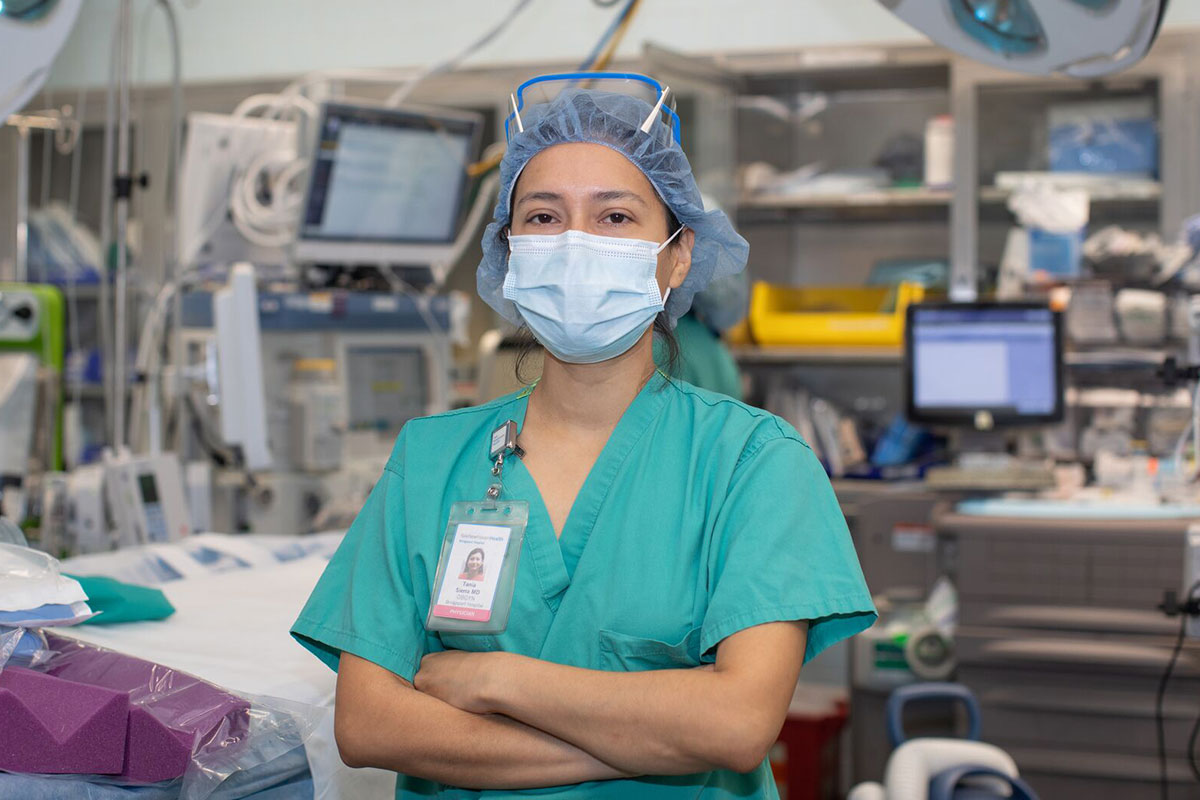
For many women, bladder control problems and other pelvic floor disorders can be as embarrassing as they are common – but they do not have to be accepted as a normal part of aging.
Learn More
After learning that these symptoms were caused by uterine fibroids, Charlene went to Bridgeport Hospital in December 2021 to become the first person in Connecticut to have her fibroids treated with laparoscopic radiofrequency ablation, a minimally invasive treatment for symptomatic uterine fibroids.
Learn More
Yale New Haven Health is proud to be affiliated with the prestigious Yale University and its highly ranked Yale School of Medicine.